What does a re-sanding job involve?
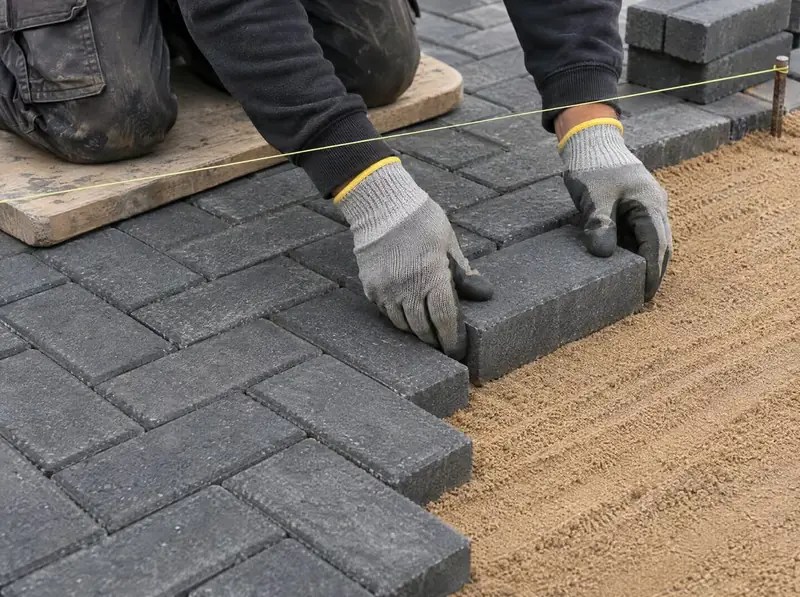
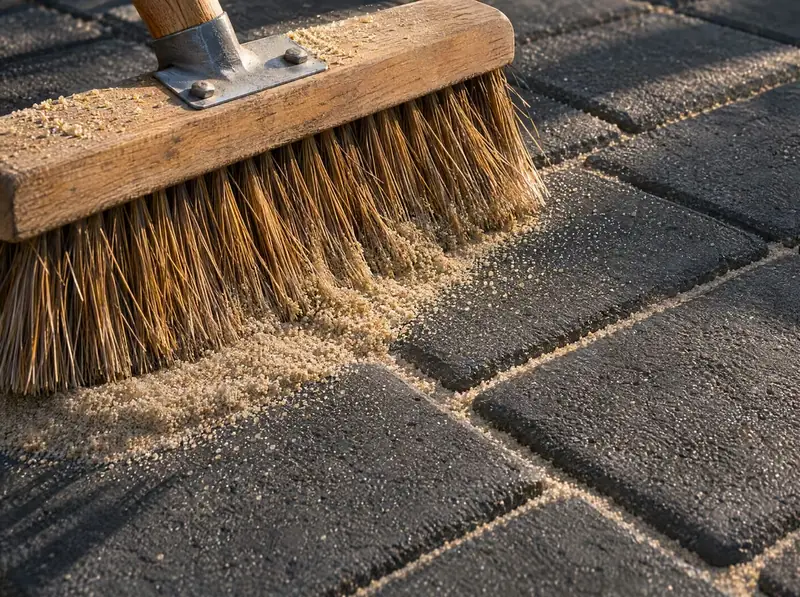
Re-sanding is refilling the joints between blocks with fine, dry jointing sand, usually kiln-dried, and working it down with a brush and a plate compactor fitted with a protective pad. The sand in the joints is what makes blocks lock together; when it washes or sweeps out, the blocks can move, rattle and let weeds in.
Joints empty naturally over time, and especially after pressure washing. Re-sanding on its own is a quick job on a clean, dry surface; on dirty paving it follows a clean.
What is included?
- Surface swept and dried
- Kiln-dried sand brushed into every joint
- Plate compactor with a rubber pad to settle the sand
- Second top-up and surplus swept off
Which options are there?
Kiln-dried sand
The standard jointing material for block paving.
Weed-inhibiting jointing sand
Sand blended to discourage weeds; costs a little more.
Grit for permeable paving
Permeable drives are re-jointed with grit, never sand.
How much does a re-sanding job cost?
For a 50 m² drive in the Midlands, that typically comes to £200–£500. London and the South East cost more, the North East, Yorkshire and Wales a little less. Smaller jobs cost more per square metre because set-up and waste costs do not shrink with the area.
| Region | Guide price inc VAT |
|---|---|
| London | £3.50–£12 per m² |
| South East | £3–£11 per m² |
| East of England | £3–£11 per m² |
| South West | £3–£10 per m² |
| West Midlands | £3–£10 per m² |
| East Midlands | £3–£10 per m² |
| North West | £3–£10 per m² |
| Yorkshire and the Humber | £2.50–£9 per m² |
| North East | £2.50–£9 per m² |
| Wales | £3–£9.50 per m² |
| Scotland | £3–£10 per m² |
| Northern Ireland | £3–£9.50 per m² |
Guide figures checked 9 November 2026. Your written quote after the survey is the price you pay. See the full price list or try the guide price tool.
Is a re-sanding job right for you?
Good for
- Joints that have emptied
- After a clean
- Rattling or loose blocks
Think twice if
- Permeable block paving (use the specified grit)
How does it work?
Quick details
Your postcode and the job. It takes a minute.
On-site check
Measurements, levels against the damp-proof course, ground and drainage.
Itemised quote
Fixed once the specification is agreed, with no vague extras.
Laid and finished
Compacted, jointed and handed back clean.
Questions about re-sanding
Why is kiln-dried sand used for block paving?
It is dry and fine, so it flows right to the bottom of narrow joints. Damp building sand bridges and leaves voids.
How often does block paving need re-sanding?
Typically every few years, and always after pressure washing. A sealer helps hold the sand in for longer.
Can I re-sand block paving myself?
Yes, on a dry day, by brushing kiln-dried sand in until the joints are full. A plate compactor with a pad gives the best fill.
Where do you offer re-sanding jobs?
We quote re-sanding jobs across the UK. Choose your area for local prices and towns.
- Bedfordshire
- Berkshire
- Bristol
- Buckinghamshire
- Cambridgeshire
- Cheshire
- Cornwall
- Cumbria
- Derbyshire
- Devon
- Dorset
- County Durham
- East Riding of Yorkshire
- East Sussex
- Essex
- Gloucestershire
- Greater London
- Greater Manchester
- Hampshire
- Herefordshire
- Hertfordshire
- Isle of Wight
- Kent
- Lancashire
- Leicestershire
- Lincolnshire
- Merseyside
- Norfolk
- North Yorkshire
- Northamptonshire
- Northumberland
- Nottinghamshire
- Oxfordshire
- Rutland
- Shropshire
- Somerset
- South Yorkshire
- Staffordshire
- Suffolk
- Surrey
- Tyne and Wear
- Warwickshire
- West Midlands
- West Sussex
- West Yorkshire
- Wiltshire
- Worcestershire
- Clwyd
- Dyfed
- Gwent
- Gwynedd
- Mid Glamorgan
- Powys
- South Glamorgan
- West Glamorgan
- Aberdeen and Aberdeenshire
- Dundee and Angus
- Argyll and Bute
- Ayrshire
- Dumfries and Galloway
- Edinburgh and the Lothians
- Fife
- Forth Valley
- Glasgow and Dunbartonshire
- Highlands
- Lanarkshire
- Moray
- Perth and Kinross
- Renfrewshire and Inverclyde
- Scottish Borders
- County Antrim
- County Armagh
- County Down
- County Fermanagh
- County Londonderry
- County Tyrone
Related services
Block paving cleaning
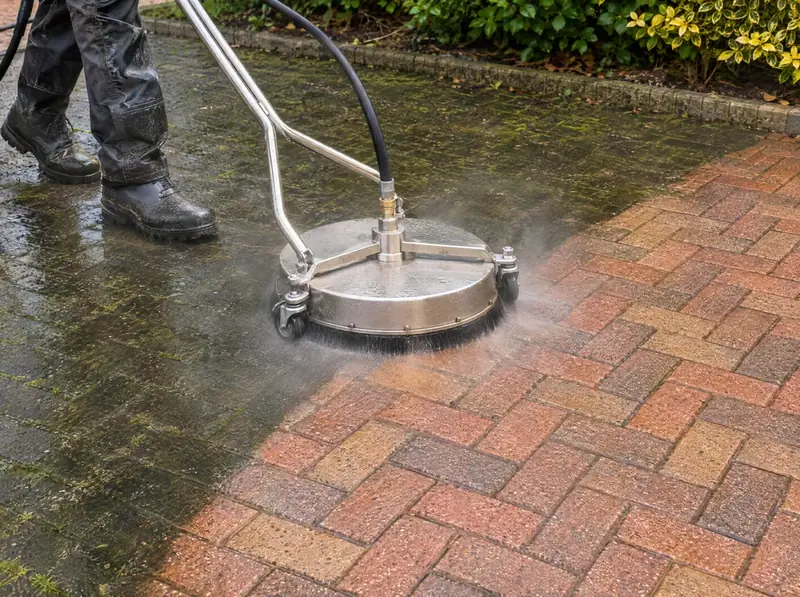
Moss, algae and grime lifted with a rotary cleaner, then the joints re-filled.
From £2.50 per m²Learn more →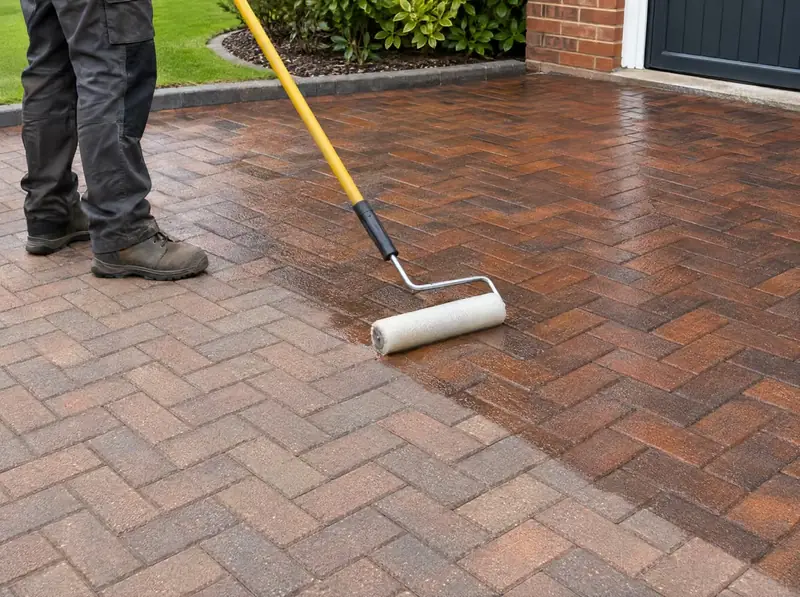
Block paving sealing
Sealer applied to clean, dry paving to hold the joint sand in and resist stains.
From £5 per m²Learn more →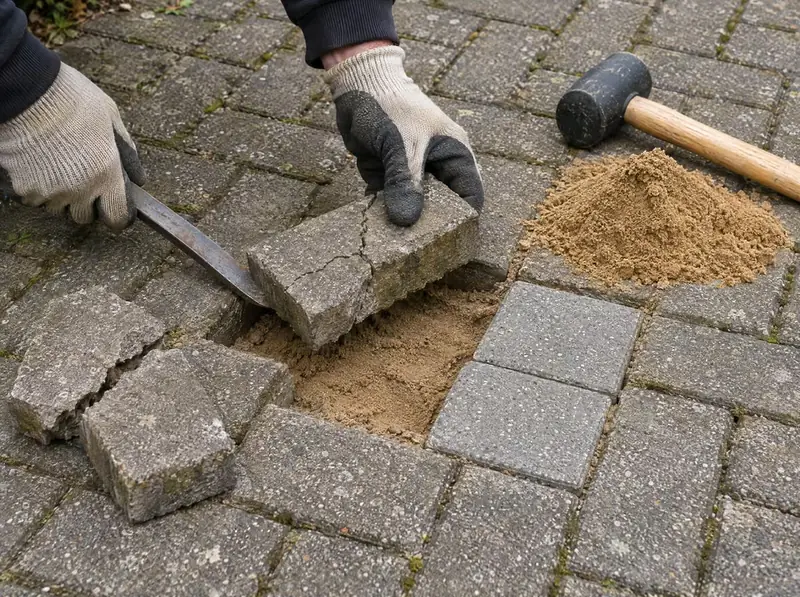
Block paving repairs
Broken, loose or stained blocks lifted out and replaced without disturbing the rest.
From £200 Learn more →