What does a recessed cover involve?
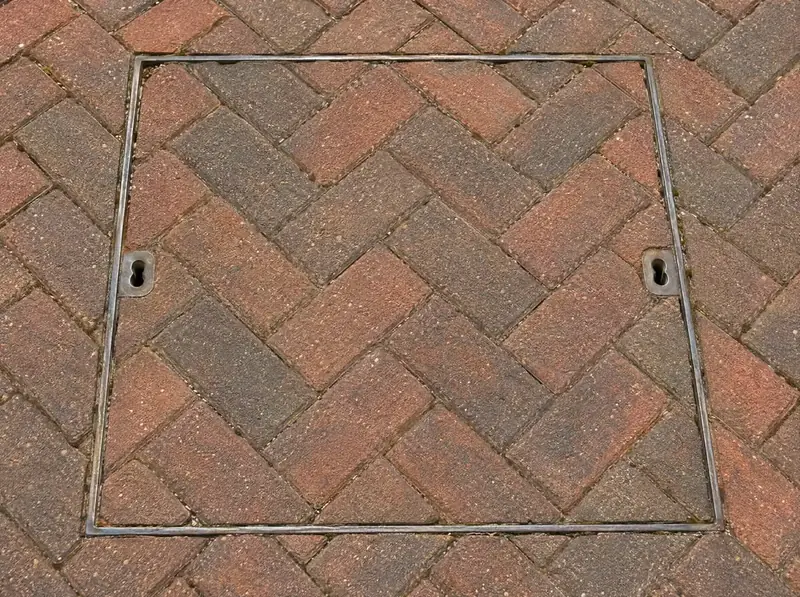
A recessed manhole cover is a shallow steel or aluminium tray set in a frame, filled with the same blocks as the drive so the paving pattern carries straight across the chamber. Only a thin rim and two lifting points show.
It is usually fitted as part of a new drive or a re-lay, when the old cover and frame are taken out, the chamber is checked and raised or lowered to the new level, and the recessed unit is bedded so it sits flush with the blocks. The tray must have a load rating suitable for cars.
What is included?
- Removal of the old cover and frame
- Chamber brickwork raised or lowered to the new level
- Recessed tray bedded on mortar and set flush
- Blocks cut to continue the pattern inside the tray
- Lifting keys handed over
Which options are there?
Pedestrian-rated tray
For patios and paths only.
Car-rated tray
For drives where vehicles may pass over the cover.
How much does a recessed cover cost?
The price depends on the size, the access and what is needed underneath, so it is confirmed after the survey. Extras are listed separately on your quote.
| Region | Guide price inc VAT |
|---|---|
| London | £300–£780 |
| South East | £270–£700 |
| East of England | £265–£680 |
| South West | £250–£650 |
| West Midlands | £250–£650 |
| East Midlands | £250–£650 |
| North West | £250–£650 |
| Yorkshire and the Humber | £225–£590 |
| North East | £225–£590 |
| Wales | £235–£600 |
| Scotland | £250–£650 |
| Northern Ireland | £240–£620 |
Guide figures checked 9 November 2026. Your written quote after the survey is the price you pay. See the full price list or try the guide price tool.
Is a recessed cover right for you?
Good for
- New drives with an ugly cover in the middle
- Re-lays where the cover sits proud or low
Think twice if
- Public sewer covers you are not permitted to alter (the water company must agree)
How does it work?
Send the basics
Postcode, what you need and a rough size. Photos help.
Survey
We measure, check levels, ground and drainage, and talk through blocks and patterns.
Written quote
An itemised quote with the specification, the price and the start date.
The work
Our paving team builds it to the agreed specification and leaves the site swept.
Do you need permission?
Front-garden paving and dropped kerbs follow different rules in each part of the UK:
Front drive rules in England
In England, paving in front of the house that covers more than 5 m² needs planning permission unless it is permeable or drains to a lawn, border or soakaway inside your boundary. Permeable block paving, or standard blocks laid to fall onto a planted strip, avoid the need for permission in most cases.
Flats and maisonettes, listed buildings, and homes covered by an Article 4 direction can have tighter rules, and conservation areas, National Parks and National Landscapes restrict some permitted development.
A dropped kerb needs your local highway authority's approval (usually the county, unitary, metropolitan or London borough council), and a new access onto an A, B or C classified road also needs planning permission.
Front drive rules in Wales
In Wales, any new or replacement hard surface at the front of a house should be permeable or drain to a permeable area within the property to avoid needing planning permission. Unlike England, there is no 5 m² allowance for new paving; only repairs of up to 5 m² of existing surface are exempt.
Since January 2019, construction work covering 100 m² or more with drainage implications, including drives and patios, needs approval from the local SuDS Approving Body (SAB) before work starts, even where planning permission is not needed.
A dropped kerb needs your council's approval as highway authority, and a new access onto a classified road needs planning permission.
Front drive rules in Scotland
In Scotland, a hard surface between the house and the road is permitted development only if it is porous or drains to a permeable area within the property. There is no 5 m² threshold: the rule applies whatever the size.
Hard surfaces are not permitted development in a conservation area or within the grounds of a listed building, so planning permission is needed there.
A dropped kerb needs consent from your council as roads authority under section 56 of the Roads (Scotland) Act 1984, and planning permission may also be needed depending on the road.
Front drive rules in Northern Ireland
In Northern Ireland, a hard surface between the front of the house and the road that covers or replaces more than 5 m² must be porous or permeable, or drain to a permeable area within the property, to be permitted development.
Hard surfaces within the grounds of a listed building need listed building consent. Planning is handled by your district council, so check with its planning office if you are unsure.
Dropped kerbs in Northern Ireland are approved by DfI Roads (the Department for Infrastructure), not the council; check planning separately with the council.
Questions about recessed covers
Can any manhole cover be replaced with a recessed one?
Covers on private drains usually can. Covers on public sewers belong to the water company, so changes need their agreement.
Will a recessed cover take the weight of a car?
Only if it is rated for it. Drives need a tray with a suitable load class; pedestrian-only trays are for patios and paths.
Can I still get into the drain?
Yes. The tray lifts out with keys; the blocks inside are bedded so they stay in place when lifted.
Where do you offer recessed covers?
We quote recessed covers across the UK. Choose your area for local prices and towns.
- Bedfordshire
- Berkshire
- Bristol
- Buckinghamshire
- Cambridgeshire
- Cheshire
- Cornwall
- Cumbria
- Derbyshire
- Devon
- Dorset
- County Durham
- East Riding of Yorkshire
- East Sussex
- Essex
- Gloucestershire
- Greater London
- Greater Manchester
- Hampshire
- Herefordshire
- Hertfordshire
- Isle of Wight
- Kent
- Lancashire
- Leicestershire
- Lincolnshire
- Merseyside
- Norfolk
- North Yorkshire
- Northamptonshire
- Northumberland
- Nottinghamshire
- Oxfordshire
- Rutland
- Shropshire
- Somerset
- South Yorkshire
- Staffordshire
- Suffolk
- Surrey
- Tyne and Wear
- Warwickshire
- West Midlands
- West Sussex
- West Yorkshire
- Wiltshire
- Worcestershire
- Clwyd
- Dyfed
- Gwent
- Gwynedd
- Mid Glamorgan
- Powys
- South Glamorgan
- West Glamorgan
- Aberdeen and Aberdeenshire
- Dundee and Angus
- Argyll and Bute
- Ayrshire
- Dumfries and Galloway
- Edinburgh and the Lothians
- Fife
- Forth Valley
- Glasgow and Dunbartonshire
- Highlands
- Lanarkshire
- Moray
- Perth and Kinross
- Renfrewshire and Inverclyde
- Scottish Borders
- County Antrim
- County Armagh
- County Down
- County Fermanagh
- County Londonderry
- County Tyrone
Related services
Block paving driveways
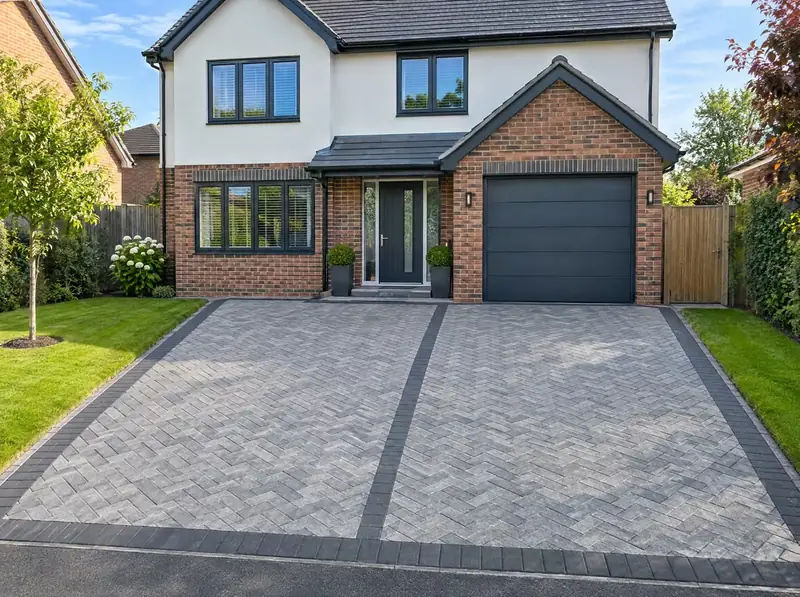
A new block drive built from the sub-base up, in the pattern and colour you choose.
From £85 per m²Learn more →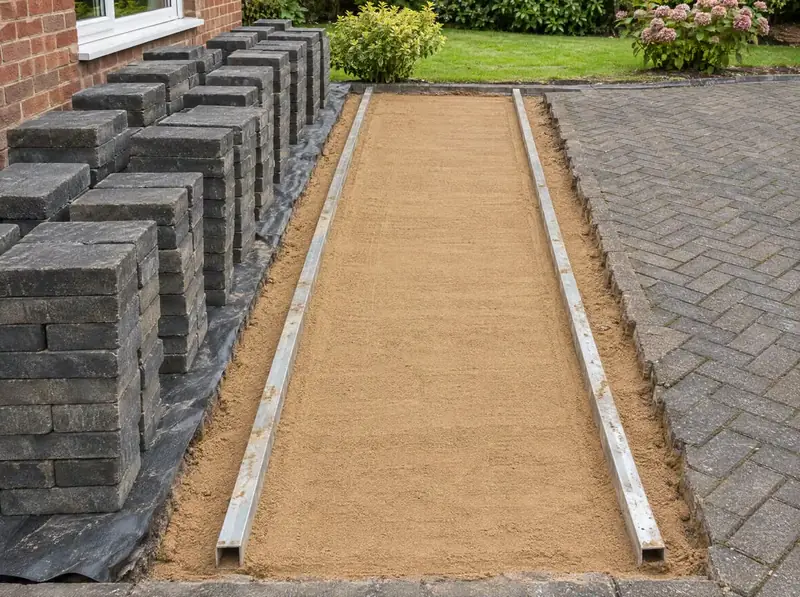
Lift and re-lay block paving
Your existing blocks lifted, the bed and base put right, and the whole area relaid.
From £35 per m²Learn more →
Drainage for block paving
Channel drains, soakaways and falls so water leaves the drive in the right place.
From £350 Learn more →