
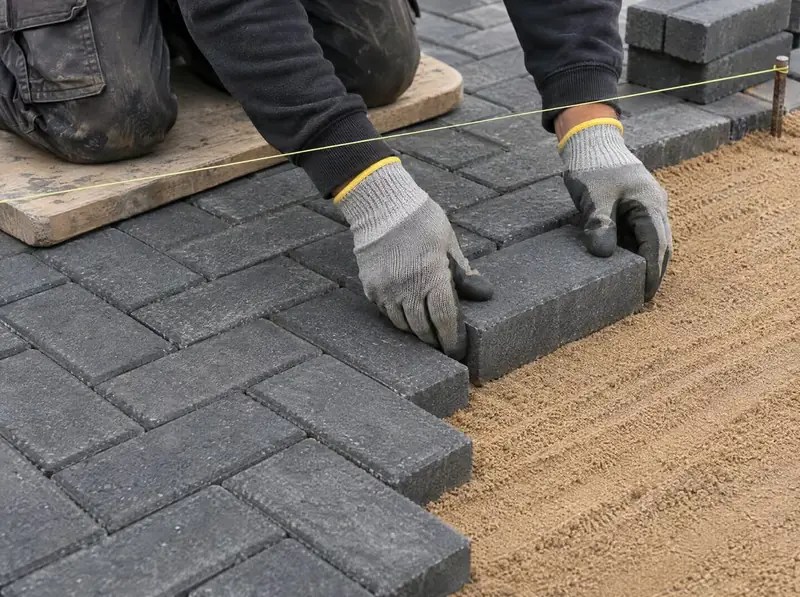
Herringbone at 45 or 90 degrees
Herringbone lays blocks in a zig-zag of right angles. At 90 degrees the zig-zag runs square to the edge; at 45 degrees it runs diagonally, which looks busier and needs more cut blocks at the edges, so it costs a little more to lay. Both lock together well under cars.
Stretcher bond
Rows of blocks, each row offset by half a block, like a brick wall. It is quick to lay and suits paths, patios and narrow drives. If used on a drive, the rows should run across the direction of travel, not along it.
Basketweave
Pairs of blocks laid in alternating directions to make squares. It is traditional and formal, and best kept to patios and paths because it has continuous joint lines.
Borders and soldier courses
A soldier course is a row of blocks along the edge, laid end-on in a contrasting colour. It frames the paving and, when bedded in concrete, acts as the edge restraint. Charcoal borders around a brindle or silver field are a common choice.
Does the pattern change the price?
A little. Herringbone at 45 degrees typically adds around 5 to 8 per cent to labour because of the extra cuts; curves, circles and fans add more. Plain stretcher bond is the quickest.
More questions
What is the strongest block paving pattern?
Herringbone. Industry design guidance treats it as the strongest pattern for vehicle areas.
Can I mix patterns?
Yes: herringbone on the drive and basketweave on a patio, tied together with the same border, works well.

Reviewed 9 November 2026. Sources include the BS 7533 series, Interpave and manufacturer laying guidance, GOV.UK, gov.wales, gov.scot and nidirect planning guidance, and the Consumer Contracts Regulations 2013.
Related services
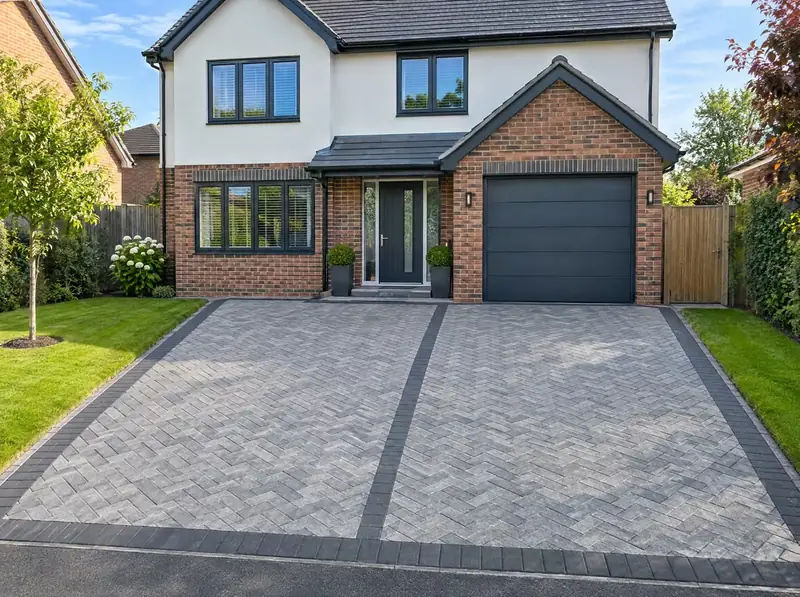
Block paving driveways
A new block drive built from the sub-base up, in the pattern and colour you choose.
From £85 per m²Learn more →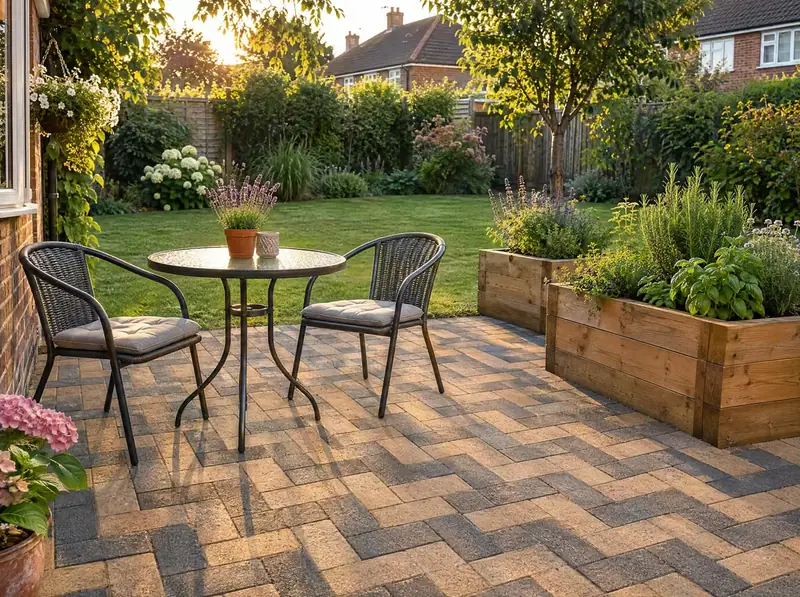
Block paved patios
Garden patios in block paving, laid to fall away from the house and built to last.
From £80 per m²Learn more →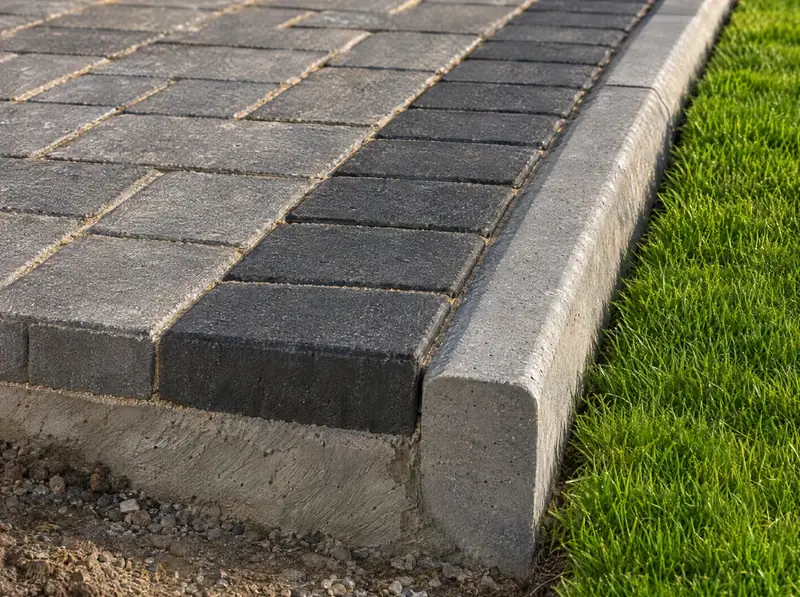
Edging, kerbs, borders and steps
The fixed edges that hold block paving together: kerbs, soldier courses and steps.
From £20 per metreLearn more →