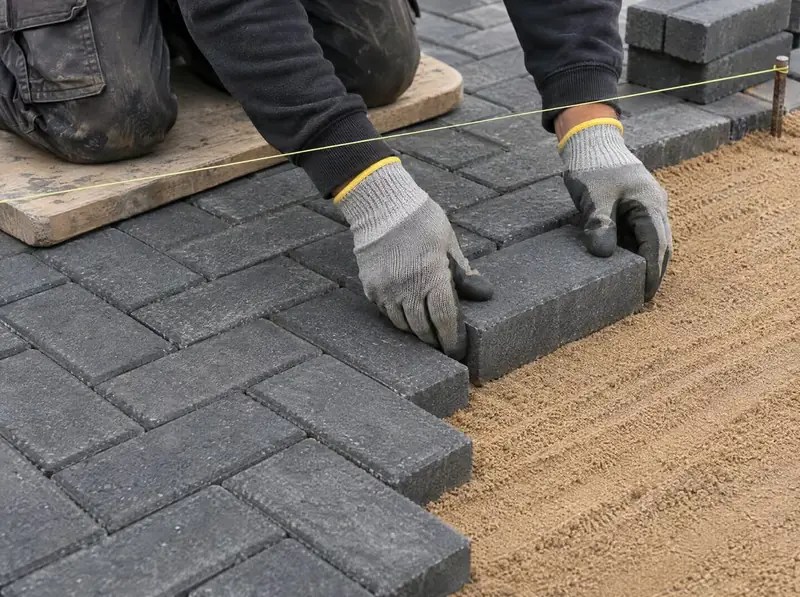
Weeds
Weeds grow into the joints from seeds that land on the surface, not up through a properly built base. Full joints, regular sweeping and, if you want, a sealer that binds the sand, keep them down. A weed membrane under paving does not stop them.
Pressure washing
Use medium pressure with the lance at an angle, or a rotary surface cleaner, and re-sand the joints the same day or as soon as the paving is dry. Never high-pressure wash permeable paving.
The white bloom on new blocks
White patches on new concrete blocks are usually efflorescence: natural salts brought to the surface by moisture. It is not a fault and fades with weather and traffic over a few months. Do not seal until it has gone.
Oil and stains
Blot fresh oil quickly and use a specialist paving cleaner. Avoid acid-based cleaners on concrete block paving: they etch the surface and fade the colour. On clay pavers, use only a cleaner the manufacturer approves. Old stains may only fade; badly stained blocks can be swapped.
Topping up sand
Brush kiln-dried sand into the joints on a dry day until they are full to just below the top of the blocks. Permeable paving takes grit, never sand.
More questions
How often should I re-sand block paving?
Whenever joints look low, and always after a deep clean.
Should I use weedkiller on block paving?
Paving-specific weedkillers work on ordinary block paving. On permeable paving, remove weeds by hand or with a burner where possible.

Reviewed 9 November 2026. Sources include the BS 7533 series, Interpave and manufacturer laying guidance, GOV.UK, gov.wales, gov.scot and nidirect planning guidance, and the Consumer Contracts Regulations 2013.
Related services
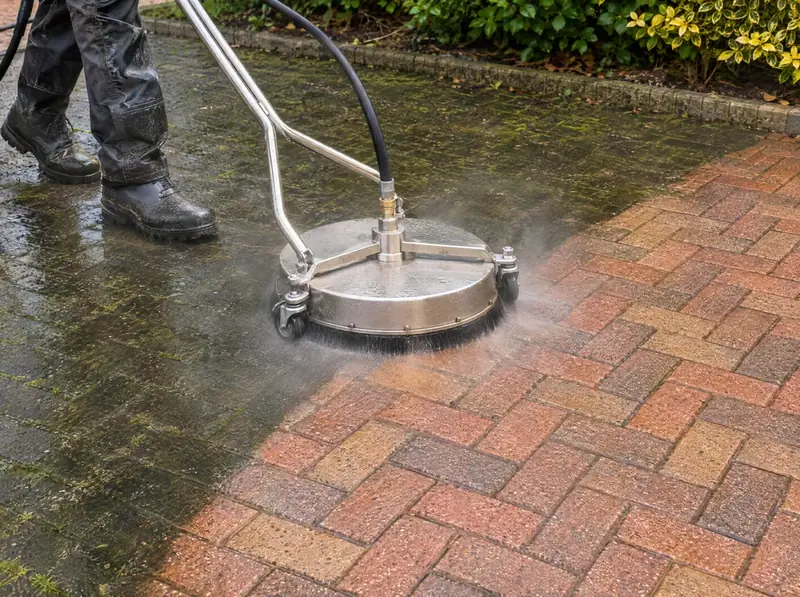
Block paving cleaning
Moss, algae and grime lifted with a rotary cleaner, then the joints re-filled.
From £2.50 per m²Learn more →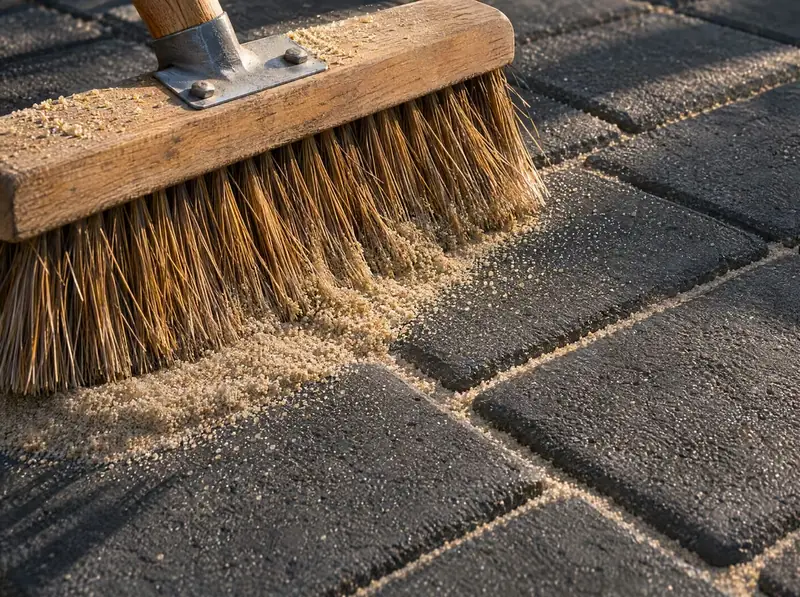
Re-sanding and re-jointing
Empty joints refilled with dry jointing sand and vibrated in, so blocks lock again.
From £3 per m²Learn more →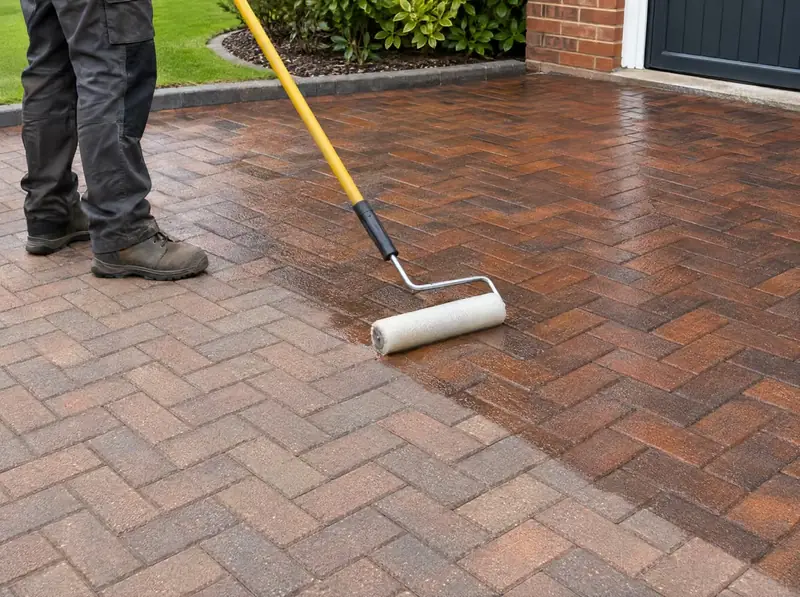
Block paving sealing
Sealer applied to clean, dry paving to hold the joint sand in and resist stains.
From £5 per m²Learn more →More guides
- How much does a block paving driveway cost in 2026?
- What should a block paving quote include?
- Herringbone, stretcher bond or basketweave: which block paving pattern?
- 50 mm, 60 mm or 80 mm: what thickness of block paving do you need?
- Do you need planning permission for a block paved driveway?
- Permeable vs standard block paving: which do you need?