
England
Front hard surfaces are covered by Class F of the General Permitted Development Order 2015. Where paving between the house front and the road covers more than 5 m², it must be porous or drain to a permeable area within the property, or it needs planning permission. Listed buildings, flats and maisonettes, and homes covered by an Article 4 direction (more common in conservation areas) can be different.
Wales
New or replacement front surfaces should be permeable or drain to a permeable area. Only repairs of up to 5 m² of existing surface are exempt. Separately, construction work of 100 m² or more with drainage implications, including drives and patios, needs approval from the SuDS Approving Body before work starts.
Scotland
Under Class 3C, a hard surface between the house and the road is permitted only if it is porous or drains to a permeable area, at any size. It is not permitted development in conservation areas or within the grounds of a listed building.
Northern Ireland
Under Class E of the 2015 order, a front hard surface covering or replacing more than 5 m² must be porous or drain to a permeable area. Listed buildings need consent. Check with your council's planning office if in doubt.
Dropped kerbs
Crossing the pavement needs the highway authority's approval: the council in England, Wales and Scotland, and DfI Roads in Northern Ireland. In England a new access onto an A, B or C classified road also needs planning permission.
More questions
What is the 5 m² rule?
In England and Northern Ireland, up to 5 m² of ordinary (non-permeable) paving at the front of a house is allowed without permission. Above that, the surface must be permeable or drain within the property.
Does permeable block paving need planning permission?
Not usually for a house, in any of the four nations, though listed buildings, conservation areas (in Scotland) and Article 4 directions can still require it.
Do Building Regulations apply to block paving?
A drive itself does not normally need Building Regulations approval, but paving must not bridge the damp-proof course, and drainage connections must follow the rules.

Reviewed 9 November 2026. Sources include the BS 7533 series, Interpave and manufacturer laying guidance, GOV.UK, gov.wales, gov.scot and nidirect planning guidance, and the Consumer Contracts Regulations 2013.
Related services
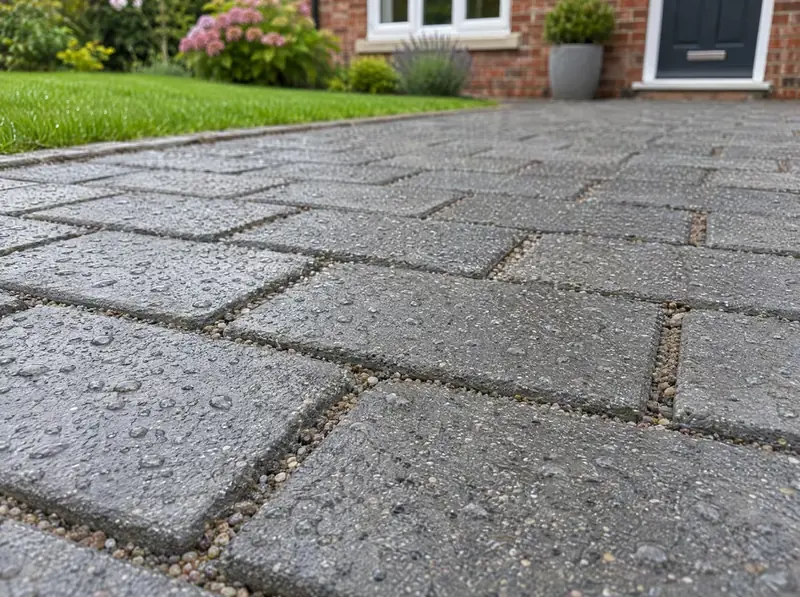
Permeable block paving
A block drive that lets rain soak through, so the surface itself manages the water.
From £105 per m²Learn more →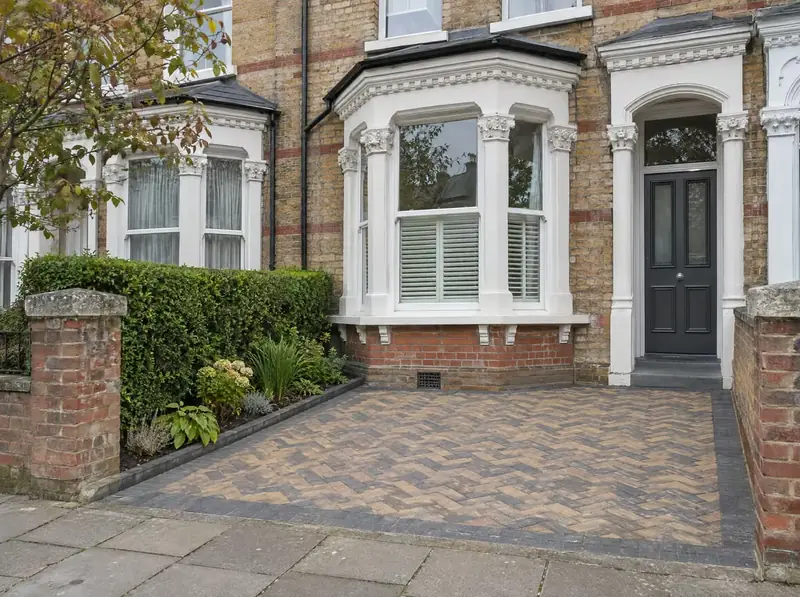
Front garden to driveway conversions
Off-street parking from a front garden, checked for space, drainage and kerb approval first.
From £85 per m²Learn more →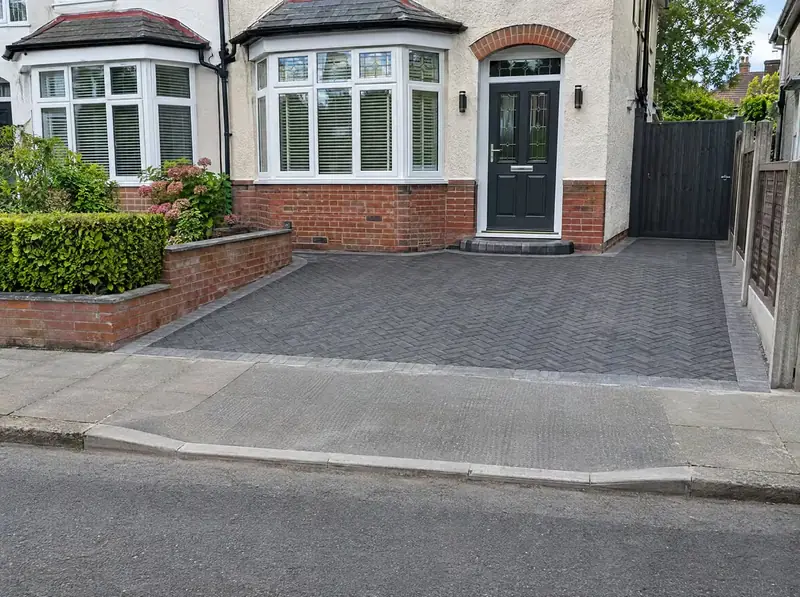
Dropped kerbs with a new drive
A legal vehicle crossing over the pavement, applied for and built to the authority's rules.
From £1,000 Learn more →