How the build-ups differ
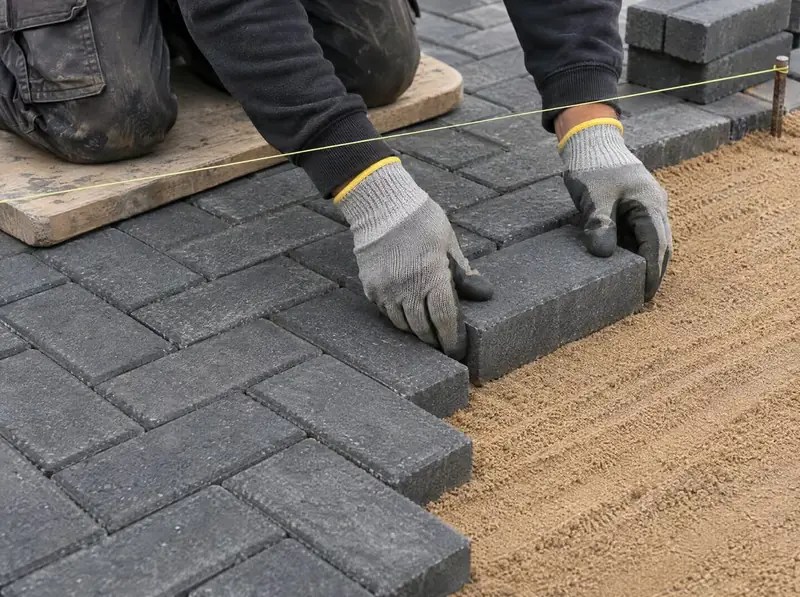
| Standard: joints | Kiln-dried sand |
| Permeable: joints | 2–6.3 mm grit |
| Standard: base | MOT Type 1 (with fines), compacted |
| Permeable: base | Open-graded stone (no fines), often deeper |
| Standard: falls | At least 1:80 to a drain or soft area |
| Permeable: falls | Can be level, up to about 1:20 |
Which systems are there?
Permeable paving is built as full infiltration (water soaks into the ground), partial infiltration (some soaks away, the rest leaves through an overflow) or a tanked system (a membrane holds the water, which is piped away). Clay soils usually need the second or third.
Maintenance
Sweep regularly, top up joints with grit (never sand), avoid high-pressure washing, and stop soil, sand and garden run-off washing onto the surface.
Which should you choose?
If there is no lawn or border to drain onto, or your front garden is large, permeable is often the simplest legal route. If you have room for a planted strip, standard blocks with good falls can do the job for less.
More questions
Can you convert a standard drive to permeable?
Not by swapping blocks. The base has to be dug out and rebuilt in open-graded stone.
Does permeable paving get weeds?
Seeds can root in any joint. Regular sweeping helps; remove weeds by hand or with a burner where possible.

Reviewed 9 November 2026. Sources include the BS 7533 series, Interpave and manufacturer laying guidance, GOV.UK, gov.wales, gov.scot and nidirect planning guidance, and the Consumer Contracts Regulations 2013.
Related services
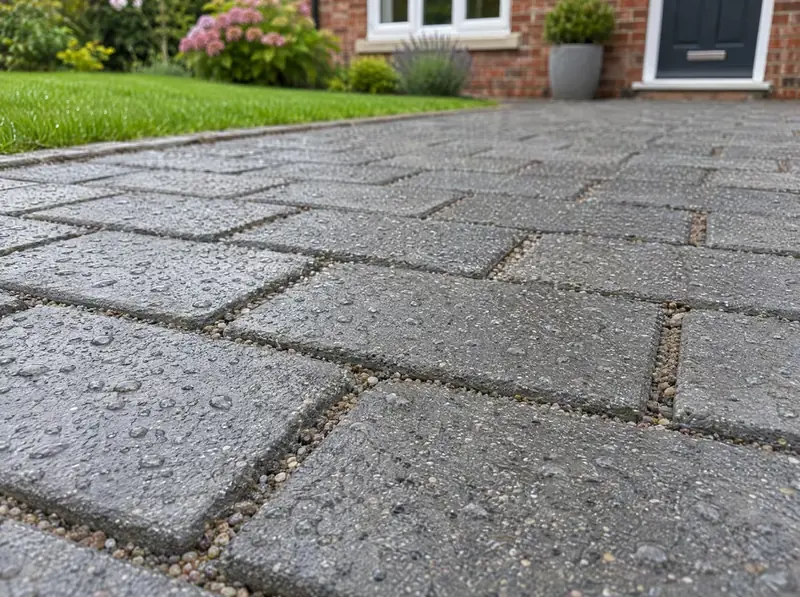
Permeable block paving
A block drive that lets rain soak through, so the surface itself manages the water.
From £105 per m²Learn more →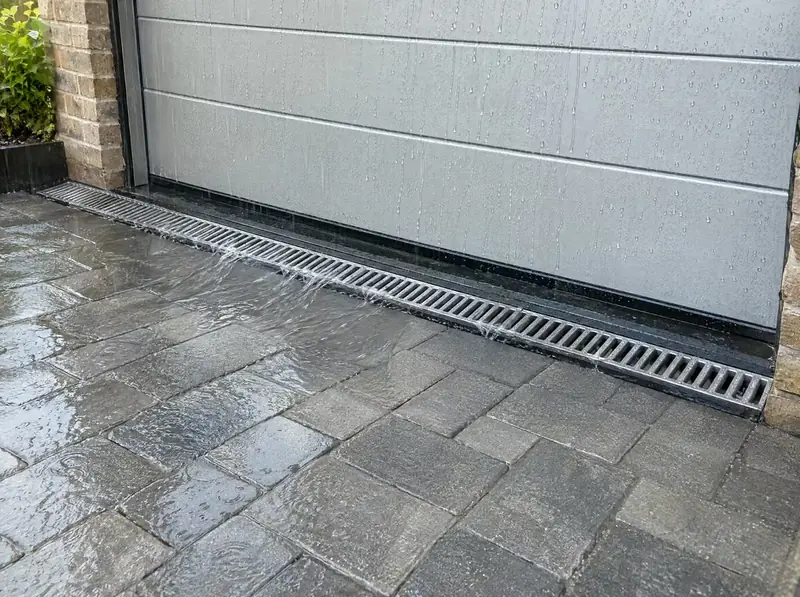
Drainage for block paving
Channel drains, soakaways and falls so water leaves the drive in the right place.
From £350 Learn more →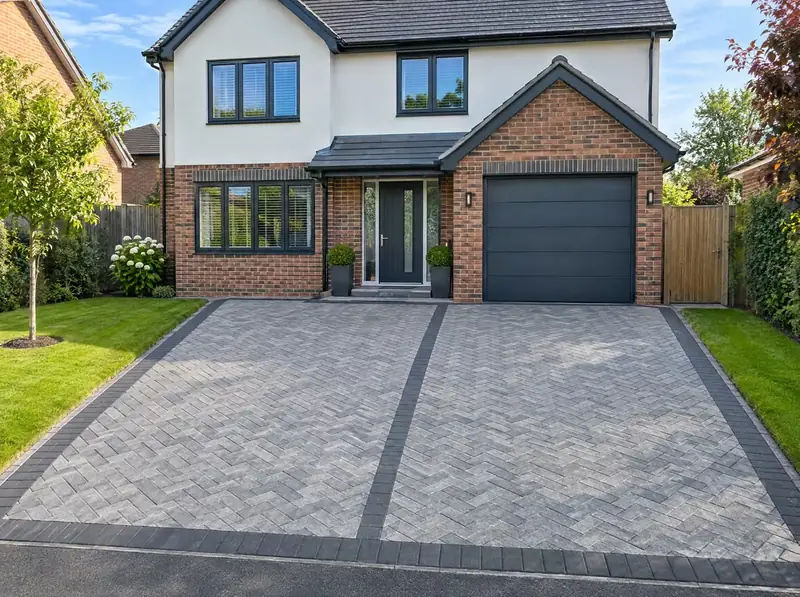
Block paving driveways
A new block drive built from the sub-base up, in the pattern and colour you choose.
From £85 per m²Learn more →