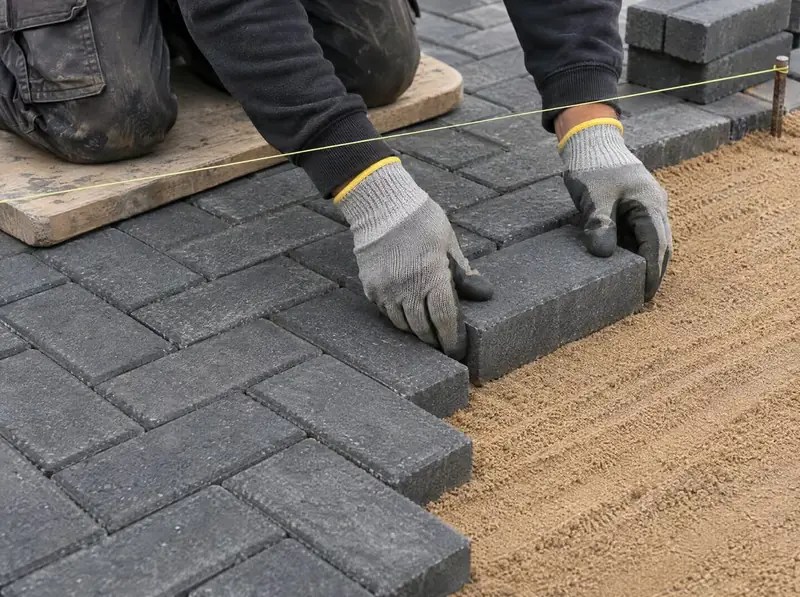
The common causes
| Dips in wheel tracks | Sub-base too thin or not compacted for car loads |
| Dip around a drain or cover | Leaking pipe or gully washing out the bedding |
| Rocking or rattling blocks | Lost joint sand, or a laying course that is too thick |
| Rows creeping at the edge | Edging missing or not set in concrete |
| A line of sinking | An old trench that was never compacted |
| Puddles that stay | Falls under about 1:80, or a sunken base |
Why sand under a dip does not fix it
Packing extra sand under sunken blocks raises them for a while, but the base below is still weak and the dip returns. The fix is to dig out and rebuild the weak base, then re-screed and relay.
Can the same blocks go back?
Usually. Lifted blocks are cleaned and relaid, so the repair matches the rest of the drive.
More questions
How much does it cost to fix sunken block paving?
A typical small patch costs £300–£1,200. Larger areas are priced per square metre: £35–£80 per m² on a sound base, £60–£110 per m² where the base is rebuilt.

Written by the Block Paving Contractors survey team
Reviewed 9 November 2026. Sources include the BS 7533 series, Interpave and manufacturer laying guidance, GOV.UK, gov.wales, gov.scot and nidirect planning guidance, and the Consumer Contracts Regulations 2013.
Reviewed 9 November 2026. Sources include the BS 7533 series, Interpave and manufacturer laying guidance, GOV.UK, gov.wales, gov.scot and nidirect planning guidance, and the Consumer Contracts Regulations 2013.
Related services
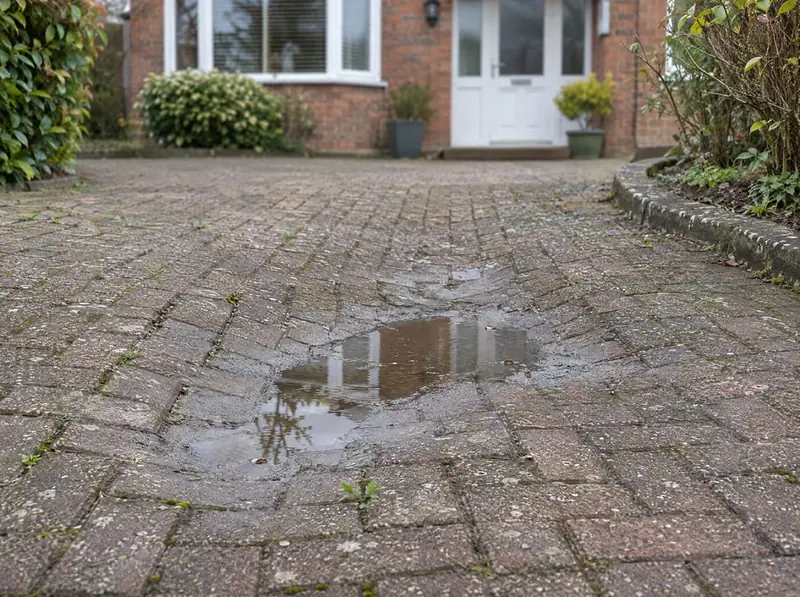
Sunken and rutted block paving
Dips, wheel ruts and puddles lifted, the cause fixed and the blocks re-levelled.
From £300 Learn more →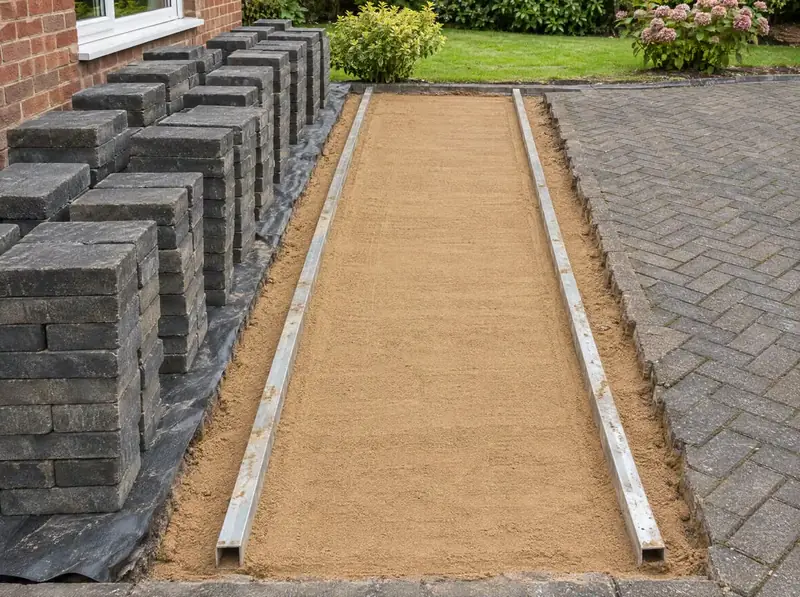
Lift and re-lay block paving
Your existing blocks lifted, the bed and base put right, and the whole area relaid.
From £35 per m²Learn more →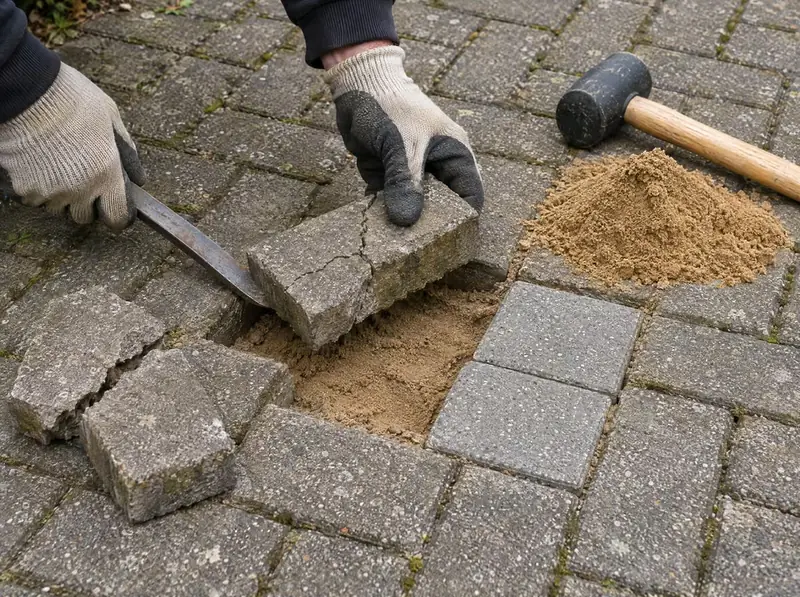
Block paving repairs
Broken, loose or stained blocks lifted out and replaced without disturbing the rest.
From £200 Learn more →More guides
- How much does a block paving driveway cost in 2026?
- What should a block paving quote include?
- Herringbone, stretcher bond or basketweave: which block paving pattern?
- 50 mm, 60 mm or 80 mm: what thickness of block paving do you need?
- Do you need planning permission for a block paved driveway?
- Permeable vs standard block paving: which do you need?