1. Excavation
The old surface and soil are dug out to formation level, typically 200 to 250 mm below the finished surface on a drive, deeper on soft ground. Soft spots are dug out and replaced.
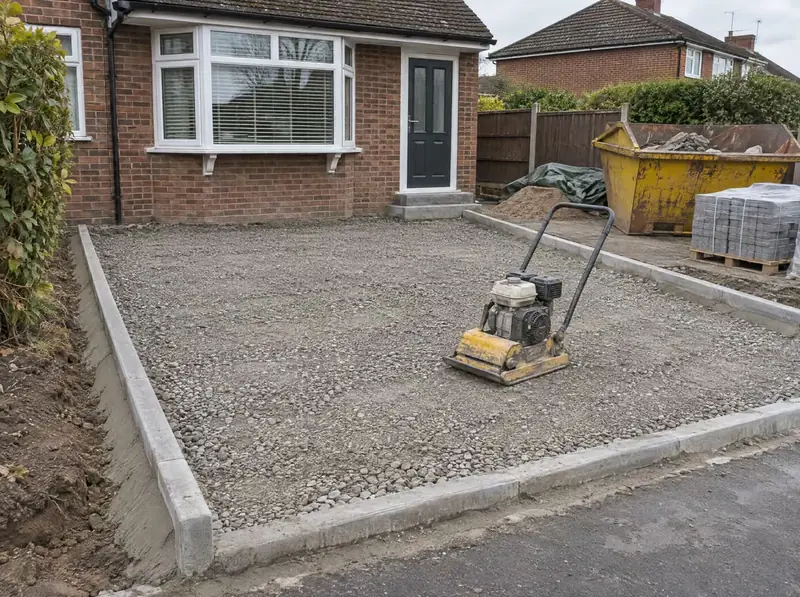
2. Edge restraints
Kerbs or a soldier course are bedded on concrete and haunched behind, so the paving cannot spread.
3. Sub-base
MOT Type 1 crushed stone is laid in layers and compacted with a plate compactor, at least 150 mm thick for a drive. The falls are formed in the sub-base, not in the sand. Permeable drives use open-graded stone instead.
4. Laying course
Sharp sand (not soft building sand) is screeded to an even 30 to 50 mm. It is not walked on once screeded.
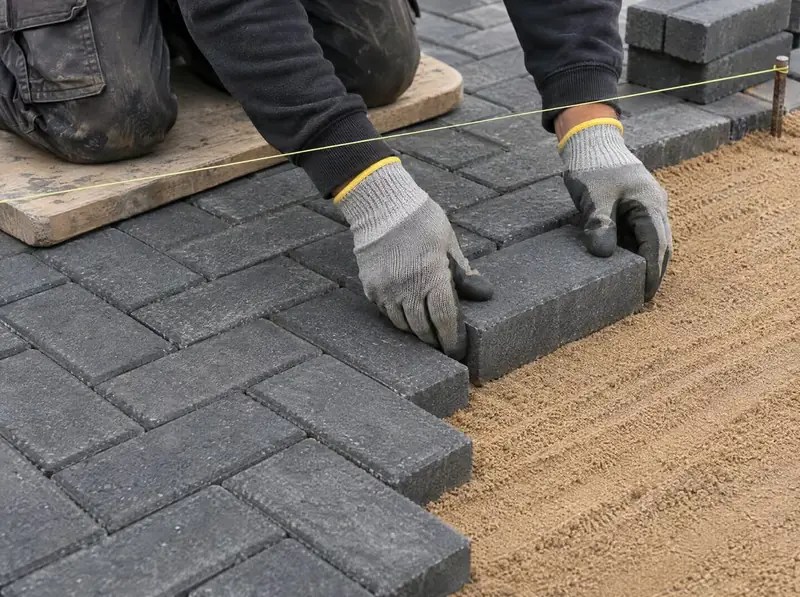
5. Blocks
Blocks are laid from a fixed edge in the chosen pattern, then cut in at the edges and around covers.
6. Jointing and compaction
Kiln-dried sand is brushed in and the surface is vibrated with a plate compactor fitted with a protective mat, then topped up. Permeable paving takes grit.
More questions
Do you need a membrane under block paving?
A geotextile is used on soft ground or in permeable designs to separate layers. It is not a weed barrier.

Reviewed 9 November 2026. Sources include the BS 7533 series, Interpave and manufacturer laying guidance, GOV.UK, gov.wales, gov.scot and nidirect planning guidance, and the Consumer Contracts Regulations 2013.
Related services
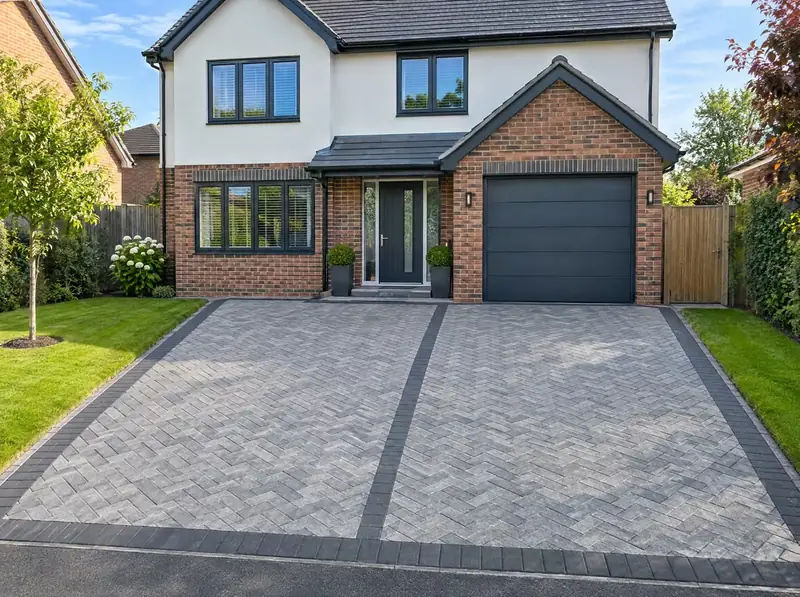
Block paving driveways
A new block drive built from the sub-base up, in the pattern and colour you choose.
From £85 per m²Learn more →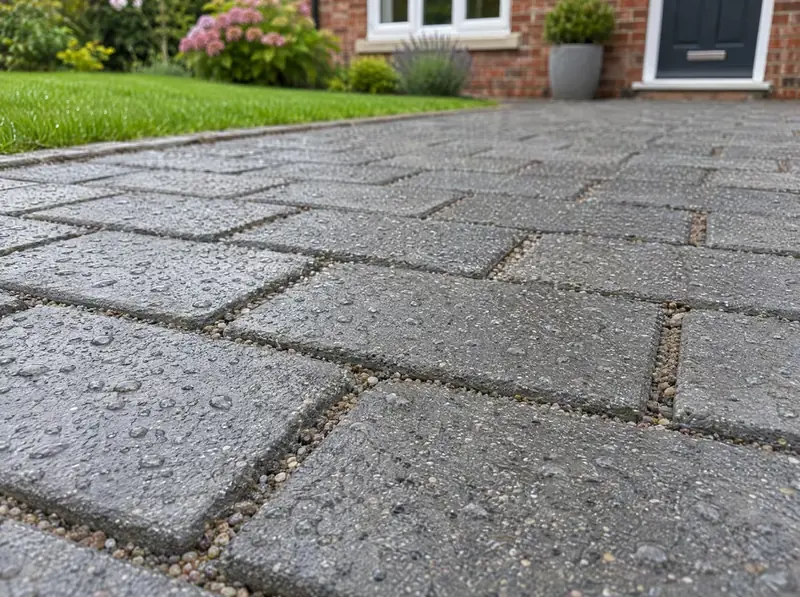
Permeable block paving
A block drive that lets rain soak through, so the surface itself manages the water.
From £105 per m²Learn more →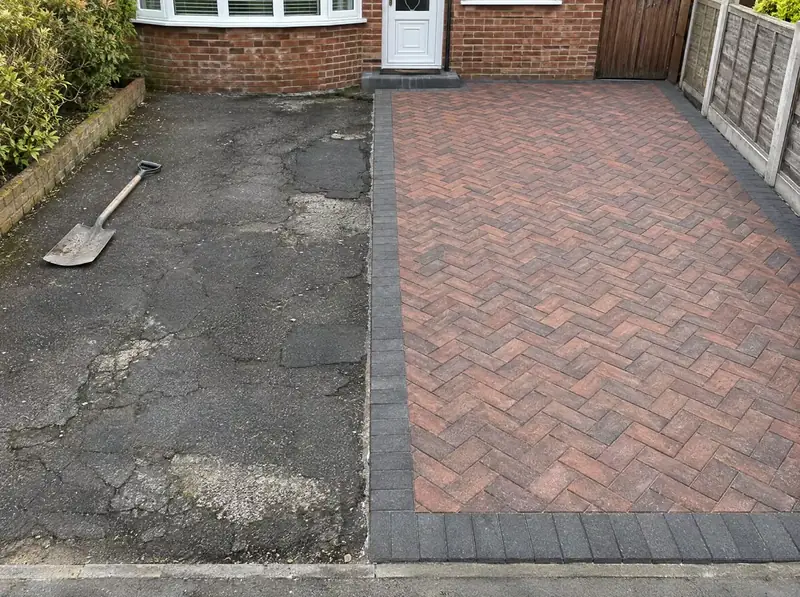
Replacing tarmac or concrete with block paving
Break out a tired tarmac, concrete or gravel drive and rebuild it in block paving.
From £95 per m²Learn more →More guides
- How much does a block paving driveway cost in 2026?
- What should a block paving quote include?
- Herringbone, stretcher bond or basketweave: which block paving pattern?
- 50 mm, 60 mm or 80 mm: what thickness of block paving do you need?
- Do you need planning permission for a block paved driveway?
- Permeable vs standard block paving: which do you need?