Look and colour
Clay keeps its colour for decades and suits period houses. Pigmented concrete can gradually lighten over the years, though modern ranges hold up well; it offers greys, charcoals and textured finishes clay does not.
Laying
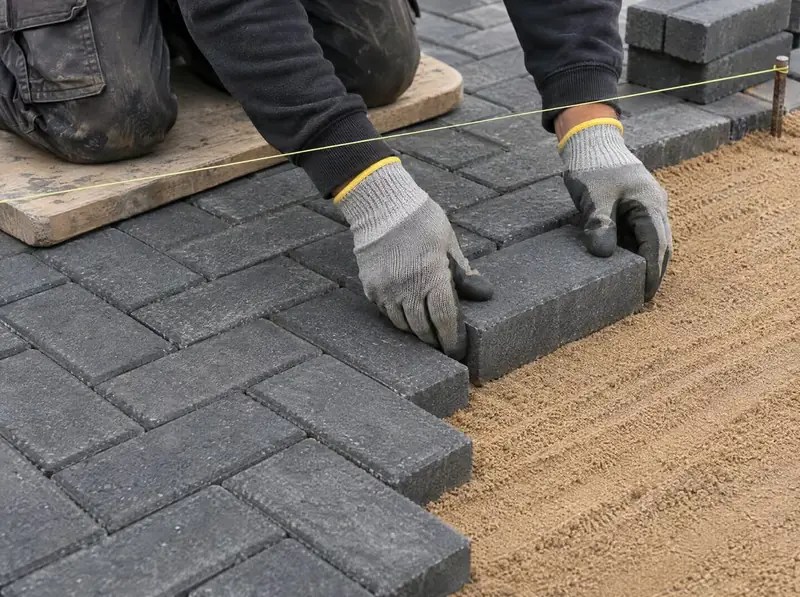
Clay pavers vary slightly more in size and are harder to cut cleanly, so laying is slower. Both are laid on the same kind of sub-base and sand bed, and both carry cars when laid in herringbone.
Which suits your home?
- Victorian, Edwardian or Arts and Crafts: clay or tumbled concrete
- Inter-war semis: brindle concrete or clay
- Modern homes: silver, grey or charcoal concrete
More questions
Do clay pavers last longer?
Both last decades on a good base. Clay's advantage is that its colour stays the same.
Is clay block paving slippery?
Clay pavers sold for paving meet slip standards for outdoor use. Moss and algae make any paving slippery, so keep it clean.

Reviewed 9 November 2026. Sources include the BS 7533 series, Interpave and manufacturer laying guidance, GOV.UK, gov.wales, gov.scot and nidirect planning guidance, and the Consumer Contracts Regulations 2013.
Related services
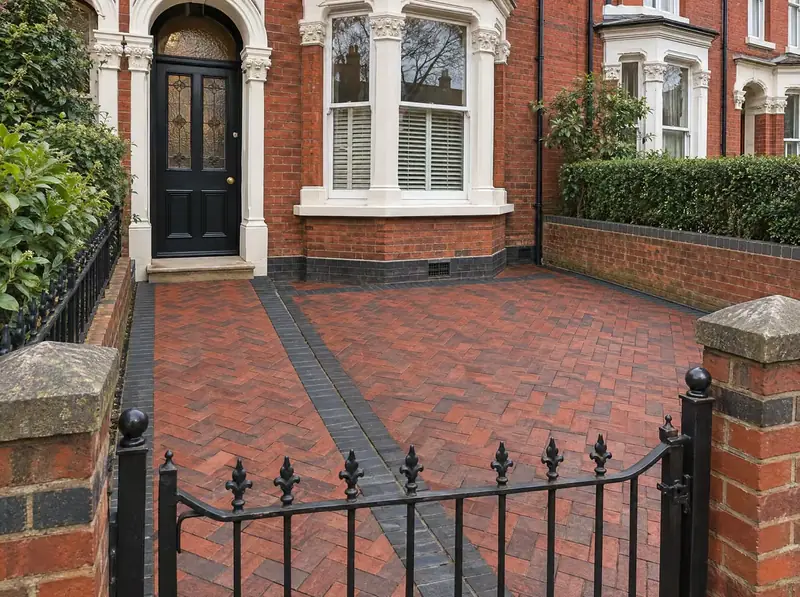
Clay block paving
Fired clay pavers for drives and frontages that keep their colour for decades.
From £115 per m²Learn more →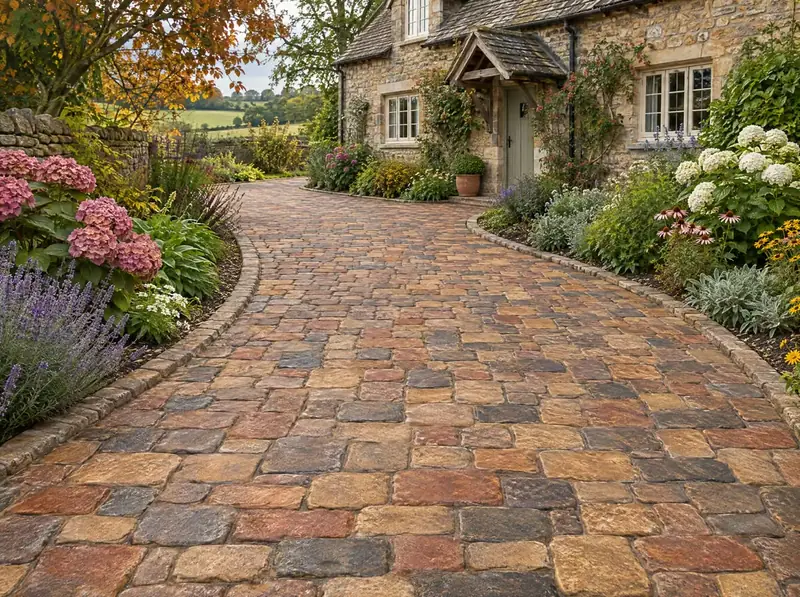
Tumbled and cobble-effect block paving
Mixed-size, softened-edge blocks for a traditional, cottage-style finish.
From £100 per m²Learn more →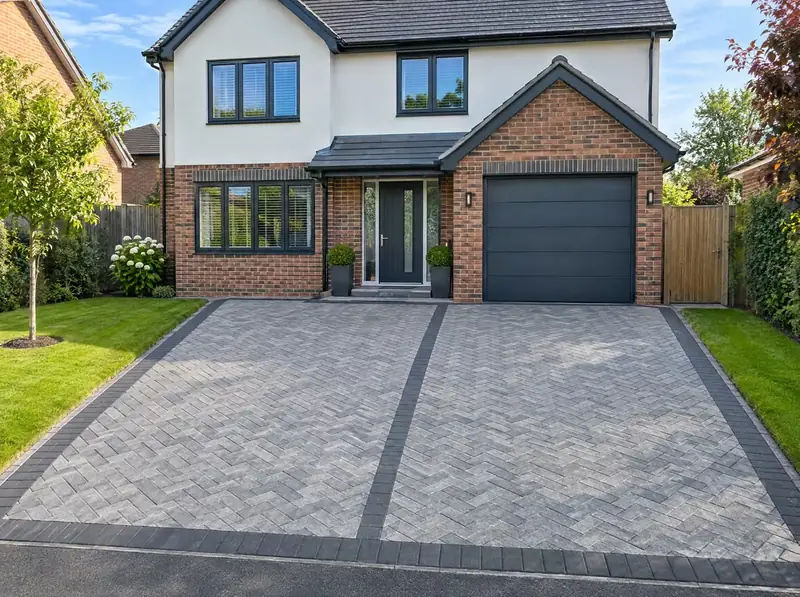
Block paving driveways
A new block drive built from the sub-base up, in the pattern and colour you choose.
From £85 per m²Learn more →More guides
- How much does a block paving driveway cost in 2026?
- What should a block paving quote include?
- Herringbone, stretcher bond or basketweave: which block paving pattern?
- 50 mm, 60 mm or 80 mm: what thickness of block paving do you need?
- Do you need planning permission for a block paved driveway?
- Permeable vs standard block paving: which do you need?